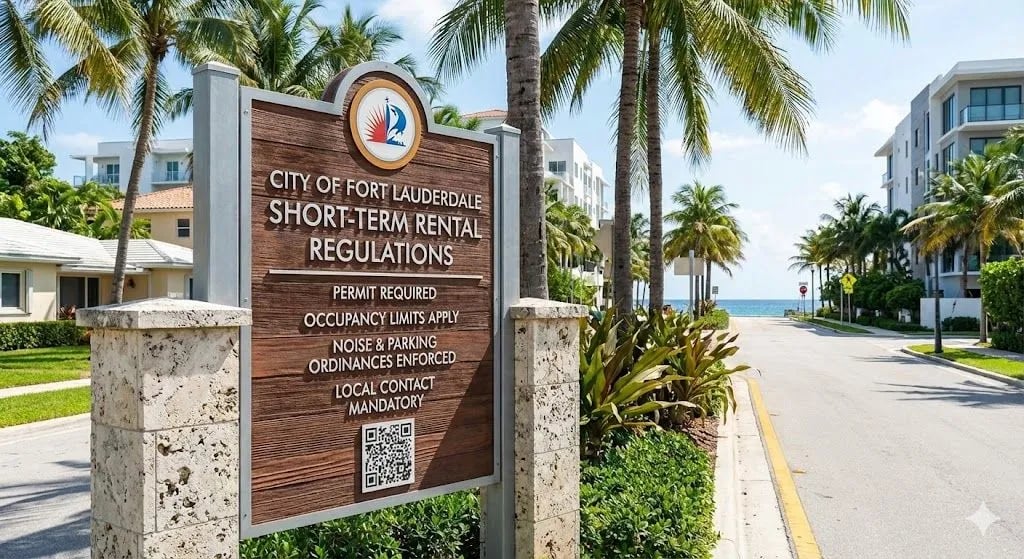
Fort Lauderdale is one of South Florida’s most desirable destinations for short‑term rentals. With its famous beaches, boating canals, and vibrant nightlife, the city attracts millions of visitors each year. For hosts and investors, this demand translates into strong profit potential — but only if you understand and comply with the city’s Airbnb rules.
Operating a short‑term rental in Fort Lauderdale isn’t as simple as listing your property online. The city enforces strict regulations to protect neighborhoods, ensure guest safety, and maintain fair competition. Failure to comply can result in steep fines and even the suspension of your rental license.
✅ Key Requirements
1. Licensing & Registration
-
Vacation Rental License: Every property must have a valid license issued by the City of Fort Lauderdale.
-
Annual Renewal: Licenses must be renewed each year, with fees varying by property type.
-
Application Process: Hosts must submit property details, ownership information, and proof of compliance with safety codes.
Why it matters: Licensing ensures your property is recognized as a legal short‑term rental. Without it, you risk fines of $1,000+ per violation.
2. Zoning Rules
-
Short‑term rentals are permitted in many residential zones, but restricted in certain neighborhoods.
-
Condominiums and HOAs often impose their own rules, which may prohibit rentals under 30 days.
-
Investors should always verify zoning and HOA bylaws before purchasing a property.
Tip: If you’re considering investing, explore areas highlighted in our blog Best Neighborhoods for Short‑Term Rentals in Broward County for insights into high‑demand zones.
3. Safety & Code Compliance
Fort Lauderdale requires all short‑term rentals to meet strict safety standards:
-
Smoke detectors in every bedroom and hallway.
-
Fire extinguishers and clearly marked exit routes.
-
Compliance with building codes and occupancy limits.
Why it matters: Safety inspections protect guests and reduce liability for hosts. A safe property also earns better reviews.
4. Taxes
-
State Sales Tax: Applied to all short‑term rental income.
-
Tourist Development Tax: Collected by Broward County.
-
Airbnb Collection: In many cases, Airbnb automatically collects and remits these taxes, but hosts should confirm compliance.
Investor Insight: Proper tax management ensures profitability and avoids costly penalties.
5. Fines & Enforcement
Fort Lauderdale actively enforces short‑term rental rules:
-
Operating without a license can result in fines exceeding $1,000 per violation.
-
Repeat offenders may face property liens or suspension of rental privileges.
-
The city uses complaint hotlines and inspections to monitor compliance.
📊 Quick Comparison Table
| Rule Area | Requirement | Risk if Ignored |
|---|---|---|
| Licensing | Annual registration + license | Fines, shutdown orders |
| Zoning | Allowed in most areas, restricted in some | HOA conflicts, legal disputes |
| Safety Compliance | Inspections + code adherence | Liability, guest safety issues |
| Taxes | Sales + tourist tax | Back taxes, penalties |
| Enforcement | Active monitoring, fines | $1,000+ per violation |
⚠️ Risks & Considerations
-
HOA Restrictions: Even if city rules allow, condo boards may prohibit short‑term rentals.
-
Seasonality: Strong winter demand, slower summer months — plan for fluctuating occupancy.
-
Legal Complexity: City, county, and state rules overlap; consult professionals before investing.
Explore:
Final Thought: Fort Lauderdale offers lucrative opportunities for Airbnb hosts and investors, but success depends on strict compliance with city rules. By securing licenses, following zoning laws, and maintaining guest safety, you can maximize profit while avoiding costly fines.